Paper bags are created through a carefully coordinated sequence that transforms paper rolls or sheets into practical packaging products. Modern manufacturing methods combine precise feeding, controlled folding, accurate cutting, reliable gluing, and efficient finishing to create consistent bags at a productive pace. Understanding https://www.ketegroup.com/how-are-paper-bags-made/ helps explain how these stages work together to shape finished paper packaging.
Selecting And Preparing Paper Materials
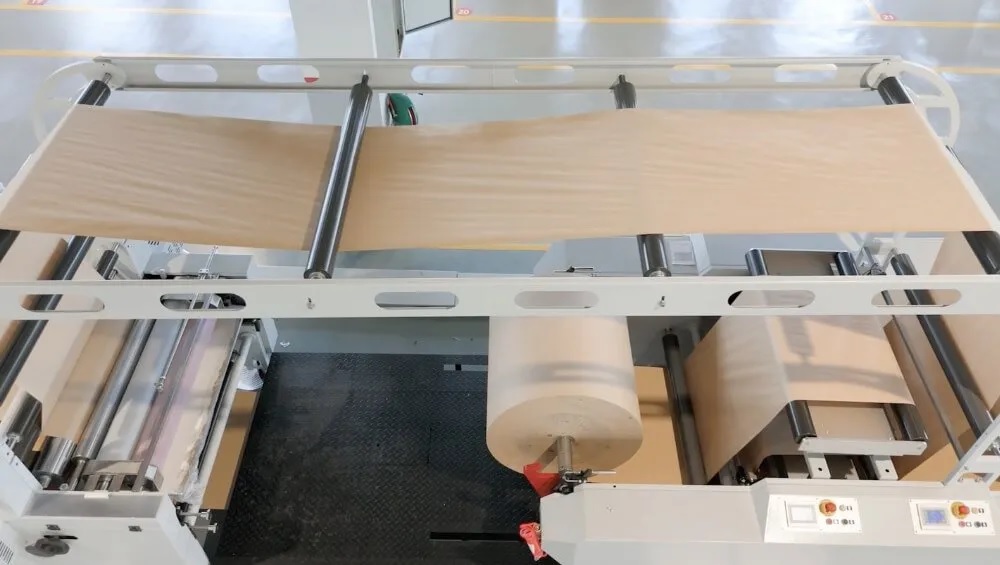
Production begins with choosing suitable paper according to the required bag size, structure, strength, and intended use. Kraft paper is commonly prepared in rolls for automated production. The paper is carefully unwound and guided through the equipment while tension-control systems help maintains smooth movement and accurate positioning.
Key preparation steps include:
- Selecting suitable paper thickness and quality
- Maintaining consistent web tension
- Aligning the paper accurately during feeding
- Preparing the material for printing or forming
These techniques establish a reliable foundation for the following manufacturing stages.
Advanced Folding And Tube Formation
Once the paper enters the forming section, specialized equipment folds it into the basic structure of the bag. Automated guides and forming plates create precise side folds and gussets while adhesive is applied along the appropriate seam. The folded paper becomes a continuous tube that provides the foundation for the finished bag.
Modern equipment supports accurate alignment throughout this stage, helping manufacturers maintain consistent dimensions across large production runs. Controlled mechanical movements also make the process faster and more repeatable.
Precise Cutting And Bottom Formation
After tube formation, cutting systems separate the continuous material into individual bag lengths. Automated cutting allows manufacturers to maintain consistent dimensions while supporting efficient production.
The bottom is then opened, folded, and sealed to create a stable base. Depending on the bag design, folding mechanisms can form different bottom structures. Carefully controlled adhesive application strengthens the folded sections and helps create a dependable finished product.
Efficient Handle Application And Finishing
For handled bags, modern production lines can integrate handle preparation and attachment into the manufacturing sequence. Twisted paper handles, flat handles, or other suitable designs can be positioned accurately and bonded to reinforced areas.
Additional finishing techniques may include:
- Creasing for cleaner folds
- Reinforcement for selected sections
- Surface printing before forming
- Automated stacking and counting
These processes improve consistency while helping maintain an organized production flow.
Quality Control Supports Consistent Results
Modern paper bag manufacturing also relies on ongoing quality checks. Operators and automated systems can monitor dimensions, folds, adhesive placement, printing alignment, and overall bag appearance. Early identification of inconsistencies helps maintain dependable output throughout production.
By combining automated machinery with controlled material handling and precise forming techniques, paper bag production becomes more efficient, organized, and consistent. These modern methods support attractive, functional packaging while enabling manufacturers to meet varied requirements with greater production efficiency.